

Megalodon Teeth
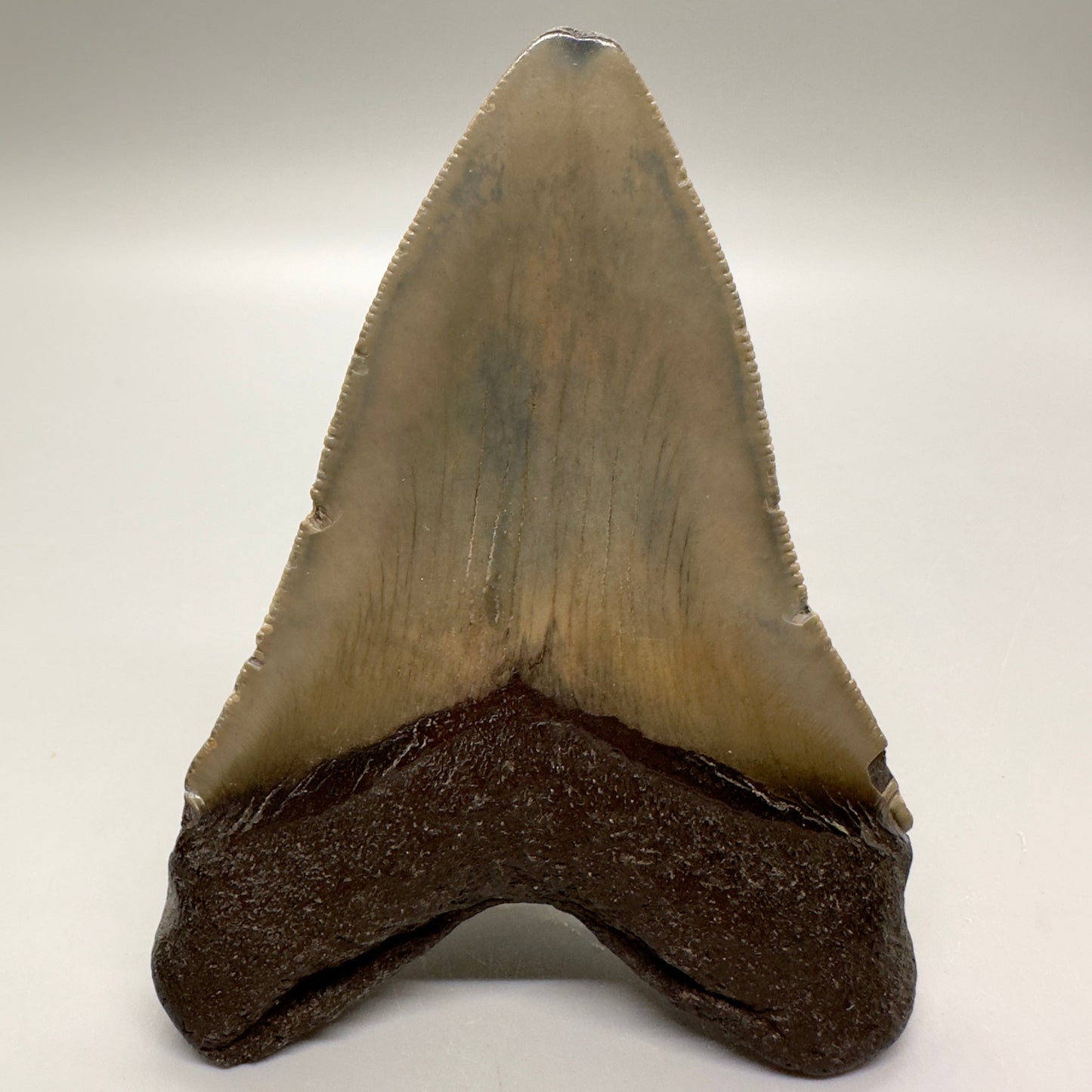
Colorful 3.94" Fossil Megalodon Tooth from North Carolina
Colorful 3.94" Fossil Megalodon Tooth from North Carolina
Couldn't load pickup availability
Species - Carcharocles megalodon
Size - 3.94" long
Location - Wilmington, North Carolina
Age - Pliocene-Miocene - Appx 4-7 million years old
Remarks - Vibrant 3.94" Fossil Megalodon Tooth, a scuba diving discovery from the rich coastal waters of North Carolina! Unearthed from the ocean depths, this captivating relic showcases the prehistoric beauty of the mighty Megalodon.
- Size: 3.94" for a substantial display.
- Origin: Coastal North Carolina - a genuine scuba diving find.
- Colors: Vibrant and unique, adding a pop of excitement.
- Rarity: Limited availability makes this a prized addition to any collection.
This 100% authentic and unrepaired fossil Megalodon tooth was sourced from the Atlantic Ocean, off the coast of North Carolina, USA. Here the teeth are found in depths of approximately 100–115 feet (30–35 meters) and are collected by specially trained scuba divers.
These divers brave life-threatening decompression sickness if strict dive guidelines are not followed. The divers who collect these are professionals with decades of experience.
What Is a Megalodon Tooth?
A Megalodon tooth is the fossilized tooth of Carcharocles megalodon, the largest predator in history. These massive teeth are remnants of a prehistoric apex predator that lived over 3.5–8 million years ago. Each authentic Megalodon fossil tooth offers a direct connection to the ancient ocean and makes a prized addition to any fossil collection.
Where Are Megalodon Teeth Found?
North Carolina Megalodon teeth are among the most sought-after in the world. Found deep in the Atlantic by professional divers, these fossils are preserved in ancient sediments and collected responsibly. Other Megalodon tooth locations include South Carolina, Florida, Peru, Morocco, Indonesia, and Japan — each region revealing a different part of the Megalodon’s history.
ABOUT THE MEGALODON AND ITS FOSSIL TEETH
Carcharocles megalodon was the largest predator ever known and one of the most fascinating creatures to ever live. This massive animal lived during the Early Pliocene–Late Miocene epochs (3.5–8 million years ago), with ancestors like Carcharocles chubutensis, angustidens, auriculatus, aksuaticus, and Otodus obliquus dating back nearly 60 million years.
The Megalodon reached lengths of at least 60 feet (18 meters) and weighed around 50 tons—over three times longer and 25 times heavier than the Great White. Quite simply, the Megalodon was one of the most awe-inspiring prehistoric marine animals ever known.
Learn more about how the Megalodon evolved into one of the ocean’s top apex predators in this quick guide:
🔗 Evolution of the Megalodon – An Easy 2-Minute Guide — written by Steve Alter, exploring the fascinating evolution of the Megalodon and its connection to the Great White.
For the most part, all that remains of this enormous predator are the fossilized Megalodon teeth. Luckily for collectors, these remarkable fossils—though difficult to find—are available to those passionate about authentic prehistoric specimens.
Why Are Megalodon Teeth Valuable?
Fossil Megalodon teeth vary in size, color, and condition, with larger teeth over 5" being far rarer and more valuable.
The most desirable specimens feature razor-sharp serrations, complete roots, intact enamel, and bourlette. After millions of years buried in the ocean, a tooth in such pristine condition is an exceptional discovery.
These Megalodon fossils are found in North Carolina, South Carolina, Florida, and other regions, as well as international sites in Peru, Morocco, Indonesia, and Japan. Each tooth offers a tangible link to a time when giant marine predators ruled the seas.
Share